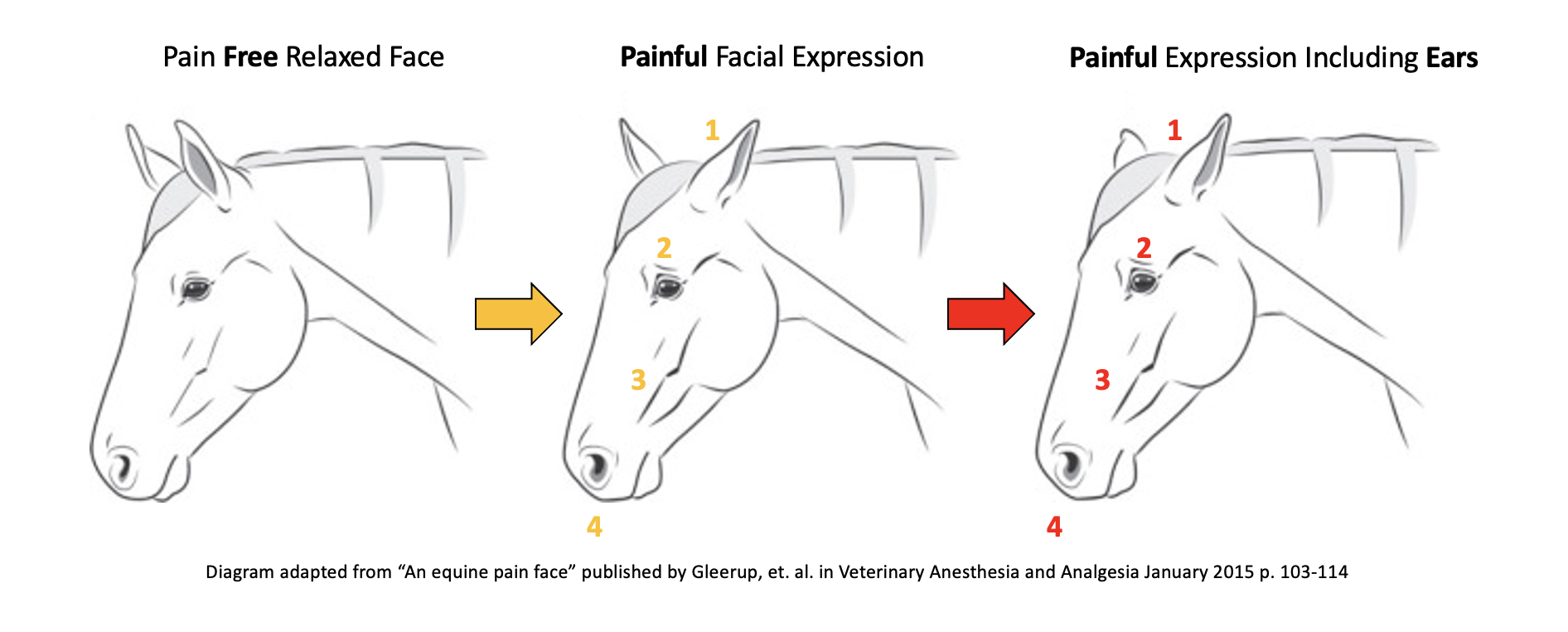
Interpreting The Equine Pain Face
Key Points On The Face That Show Expression:
1) The ears may be asymmetrical and dropped outward, often moving in different directions
2) The muscles around the eye may be tightened with a “worried” expression
3) The muscles of the jaw may be tense and drawn up
4) The lips may be held tight together, the nostrils flared or drawn up and the shape of the muzzle and chin taut
Interpreting a horse’s facial expression can be difficult. Just like humans, however, horses show signs of pain through facial expression, altered demeanor and behavioral cues. These clinical signs can be useful to determine when an individual is in pain. Dental disease in horses often goes undiagnosed until it is in an advanced or chronic stage when the clinical signs become unquestionable, either quitting or dropping hay, loosing significant weight, developing a swollen area on the face, or even nasal discharge or a draining tract somewhere in the skin. These are all signs of chronic disease that has been going on for months or even years. Earlier recognition of pain may be useful to diagnose dental disease at an earlier stage, improving quality of life and preventing unnecessarily prolonged discomfort.